“Believe in yourself and anything is possible”
#MondayMotivation

TAGB Tae Kwon-Do Schools in Emersons Green and Chipping Sodbury, South Gloucestershire, Bristol

“Believe in yourself and anything is possible”
#MondayMotivation

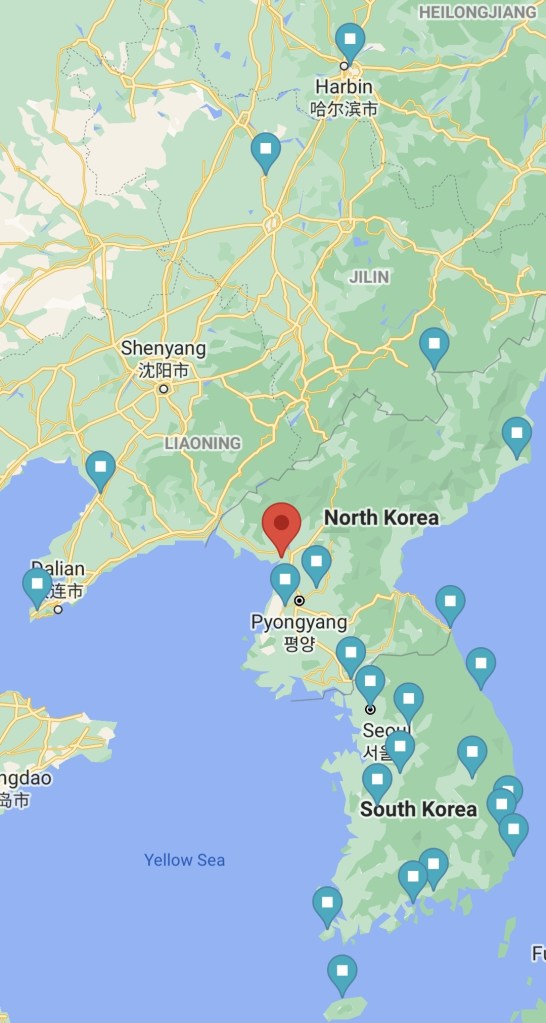
43 miles of running and we arrive in Kangdong at the site of the Mausoleum of Dan Gun on the slopes of Mount Taebak.
The story of Dan Gun starts with the God Hwanin who sent his son Hwang-Ung to build a new country. Hwang-Ung settled on the slopes of the Paektu Mountain and one day met a tiger and a bear who asked to be transformed into human form. Hwang-Ung gave them 20 cloves of garlic and some mugworts and instructed them to eat only that and wait in a cave for 100 days. The tiger grew hungry and left the cave after 20 days, whilst the bear stayed and transformed into a beautiful woman, Ung-Yo. Hwang-Ung was so taken by her beauty that he married her and she gave birth to a son, Dan Gun, who went on to found the first Korean dynasty, the Gojoseon Dynasty in 2333BC. While this story is considered a myth there are theories as to the basis of this myth; some believe Gojoseon was founded from the integration of a sky-worshipping Bronze Age tribe and a native bear-worshipping tribe and that this was where the myth originated.
The legend of Dan Gun has been used for years to bolster national pride and has given Koreans a strong sense of identity and culture. The 3rd October is known as Dan Gun Day and is celebrated as a national holiday in Korea. In 1909 the religion of Daejonggyo or Dangungyo was founded by Na Cheol based on Dan Gun. Later, North Korean leader Kim Il-Sung insisted on the historical accuracy of the figure of Dan Gun and instructed archaeologists to locate the remains and grave of Dan Gun. The Mausoleum of Dan Gun is reputed to have an original stone monument and buried remains of King Dan Gun and his wife, but North Korea has not permitted any independent testing of dating or authenticity. The ancient burial site had a pyramid built atop it in 1994 consisting of 1994 stone blocks and now occupies 1.8km².
To celebrate our arrival here we will be completing 43 bear bird dogs, before continuing 33 miles south west to a famous birthplace.


Well that was a long stint! 230 miles of solely running since our last stop at the Lui Shung prison. A few of us have slowed due to injury but we are still going!
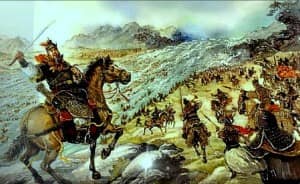
We have now arrived at the Chongchon River and the site of the Battle of Salsu in 612AD. It began when Emperor Yang of the Sui Dynasty invaded Goguryo with well over 1 million men. It is said that the army was so large it took 40 days to depart and that the line of soldiers stretched back for 250 miles.
King Yeong-Yang of Goguryo ordered all of his troops to retreat and commissioned Ul-Ji Moon Dok as a Field Marshal to defend the nation. Ul-Ji opted for a Chongya tactic, clearing the land of all food supplies. He feigned peace negotiations with the Sui forces to assess their position. The Sui Generals became unsure of their plans, recognising the impact a lack of supplies had had on their men, but Ul-Ji taunted them, writing “Your divine plans have plumbed the heavens; Your subtle reckoning has spanned the earth. You win every battle, your military merit is great. Why then not be content and stop the war?” But the Sui troops continued towards Pyongyang, with Ul-Ji‘s troops attacking up to seven times a day, each time feigning defeat and withdrawing, only to attack again. The plan was to make the Sui feel victorious whilst slowly weakening and lessening their numbers.
As the Sui troops reached the Chongchon River in South Pyongyang they discovered the water was so low they could cross. As they did, Ul-Ji ordered the dam he built prior to their arrival to be opened, sending cascades of water down the river, flooding it and drowning thousands of enemy soldiers. The Goguryo cavalry then charged the remaining troops, forcing them to retreat to the Liaodong Peninsula to avoid being killed.
Around 99% of the Sui troops were killed, making the Battle of Salsu one of the most lethal classical formation battles in world history. It eventually aided a victory of Goguryo over the Sui Dynasty, which, coupled with internal conflicts and rebellion, led to the demise of the Sui Dynasty in 618AD.
We will be celebrating our arrival with 230 russian twists before continuing 43 miles south east to the tomb of a great legend.





 Newman Martial Arts