“If people are doubting how far you can go, go so far that you can’t hear them any more”
#MondayMotivation

TAGB Tae Kwon-Do Schools in Emersons Green and Chipping Sodbury, South Gloucestershire, Bristol

“If people are doubting how far you can go, go so far that you can’t hear them any more”
#MondayMotivation

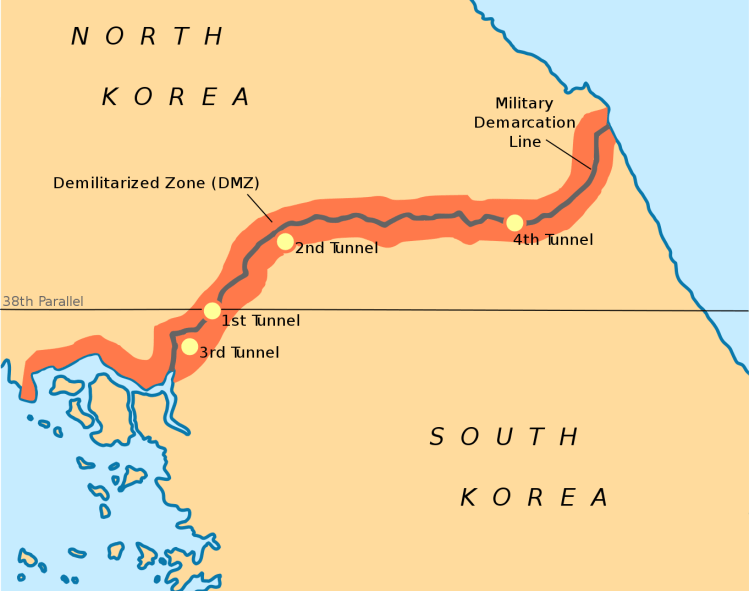
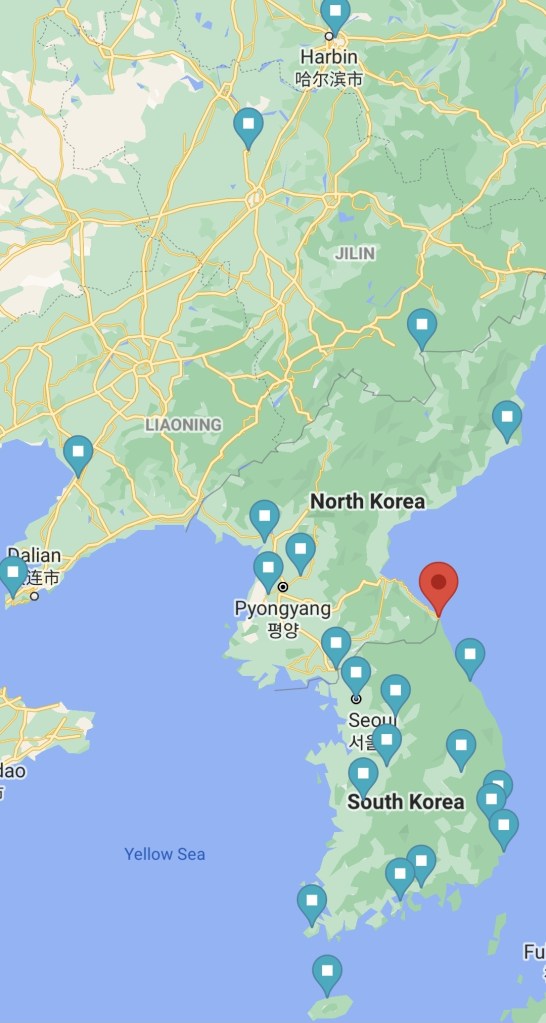
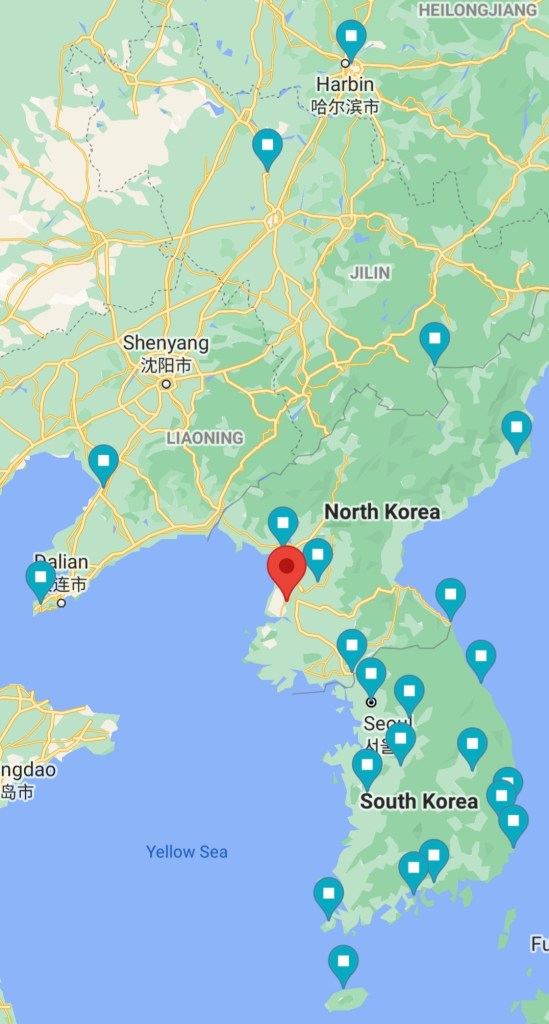
It’s been a delightful 154 miles; the weather has been lovely (mostly) and Rich has finally found his trainers! We now arrive at the Eastern side of the North-South Divide, at the Mount Kumgang Checkpoint.
When Japan withdrew from Korea in 1945 following their surrender at the end of World War II, the USA, Soviet Union, China and Great Britain decided to run Korea for 5 years under a Four Power Trusteeship, after which Korea would become independent again. The country was divided into two halves along the 38th parallel, from Mount Kumgang west across the country, with the Soviet Union occupying the North and USA occupying the South. General Choi chose to join the South Korean army because of his opposition to communism, and in 1946 was commissioned as a 2nd Lieutenant.
The Soviet Union withdrew most of its forces from North Korea in 1948 and unification talks began, but South Korea’s new President, Syngman Rhee, was a hard-line anti-communist and wasn’t keen. Both sides began to fear the other’s true intention was to take over the other with their own government, and talks remained unsuccessful.
Despite withdrawing most of its forces from North Korea, the Soviet Union left many tanks, aircraft and heavy weapons, unlike the USA, who feared any heavy weaponry left in South Korea would not be used solely for internal peacekeeping. This notably weakened South Korea, and led to Kim Il-Sung’s forces invading South Korea on 25th June 1950 in the start of the Korean War. The Korean War lasted for just over 3 years, during which time General Choi had reached the rank of Brigadier General. The United Nations intervened in the war, allowing the US Navy and Air Force to assist South Korea. Eventually an armistice was suggested by India and ceasefire finally ensued on 27th July 1953. Battle lines were drawn approximately where they had begun along the 38th parallel and so around this the Demilitarized Zone was established, 2.5miles wide.
We will mark our arrival with 154 Bulgarian Split Squats before continuing 102 miles west along the North-South Divide.

“Keep your eyes on the stars and your feet on the ground”
#MondayMotivation

“The man of top of the mountain didn’t fall there”
#MondayMotivation

“Wanting to be someone else is a waste of the person you are”
#MondayMotivation

“You never fail until you stop trying”
#MondayMotivation

“There are far, far better things ahead than anything we leave behind”
#MondayMotivation

“Life isn’t about finding yourself. Life is about creating yourself.”
#MondayMotivation

“Set a goal so big that you can’t achieve it until you grow into the person who can”
#MondayMotivation
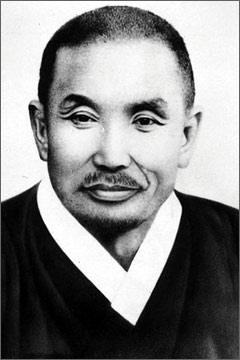
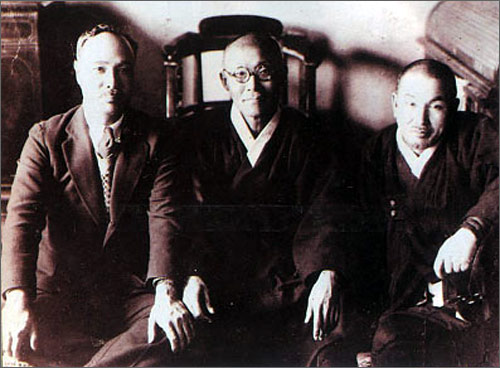
33 miles later we arrive in Kangso-Kun County, Pyongyang, now part of North Korea. On 1st February 1883 Cho Man-Sik was born here. Cho Man-Sik, also known by his penname Ko Dang, was an activist within Korean’s Christian movement and an elder in the Presbyterian Church he attended in Pyongyang.
From June 1908 to 1919 he studied law in Tokyo at Meiji University. He was influenced By the likes of Ahn Chang Ho and became involved with the Korean Independence Movement following Japan’s annexation of Korea in 1910. Cho took part in the Sam Il marches of 1st March 1919 which led to his arrest.
On his release he continued with non-violent resistence, for which he became known as the “Ghandi of Korea“. In actual fact it was the peaceful Sam Il marches that inspired Mahatma Ghandi’s non-violent resistence movement one year later. Cho was also keen on national self-sufficiency and formed the Korean Products Promotion Society, encouraging Koreans to buy Korean goods and instilling a sense of nationalism through this.
In August 1945, with Japanese surrender imminent, the Japanese Governor-General of Pyongyang approached Cho to organise a committee to take over control of the area. Cho agreed and set up the Provisional People’s Committee for the Five Provinces, for which he was the chairman. Days later the Soviet Union arrived in Pyongyang as per their agreement with the USA to take control of North Korea up to the 38th parallel. Cho Man-Sik was forced to share his power with communist supported Kim Il-Sung. Their clash in ideologies led to a lot of tension, culminating in Cho being forced to resign as chairman. He later stood in a vice-presidency election in 1948 but lost due to the increasing communist grip on North Korea. His resistance to communism led to his arrest. The last confirmed reports of him were at a prison in Pyongyang; it is believed he was executed here on 15th October 1950 during the Korean War. In 1970 the South Korean government declared Cho a martyr and awarded him the posthumous title of Order of the Republic of Korea in recognition of his contribution to his country.
We will be marking our arrival with 33 crucifix press ups before continuing 154 miles to the infamous North South Divide.

 Newman Martial Arts