


Welsh Championships
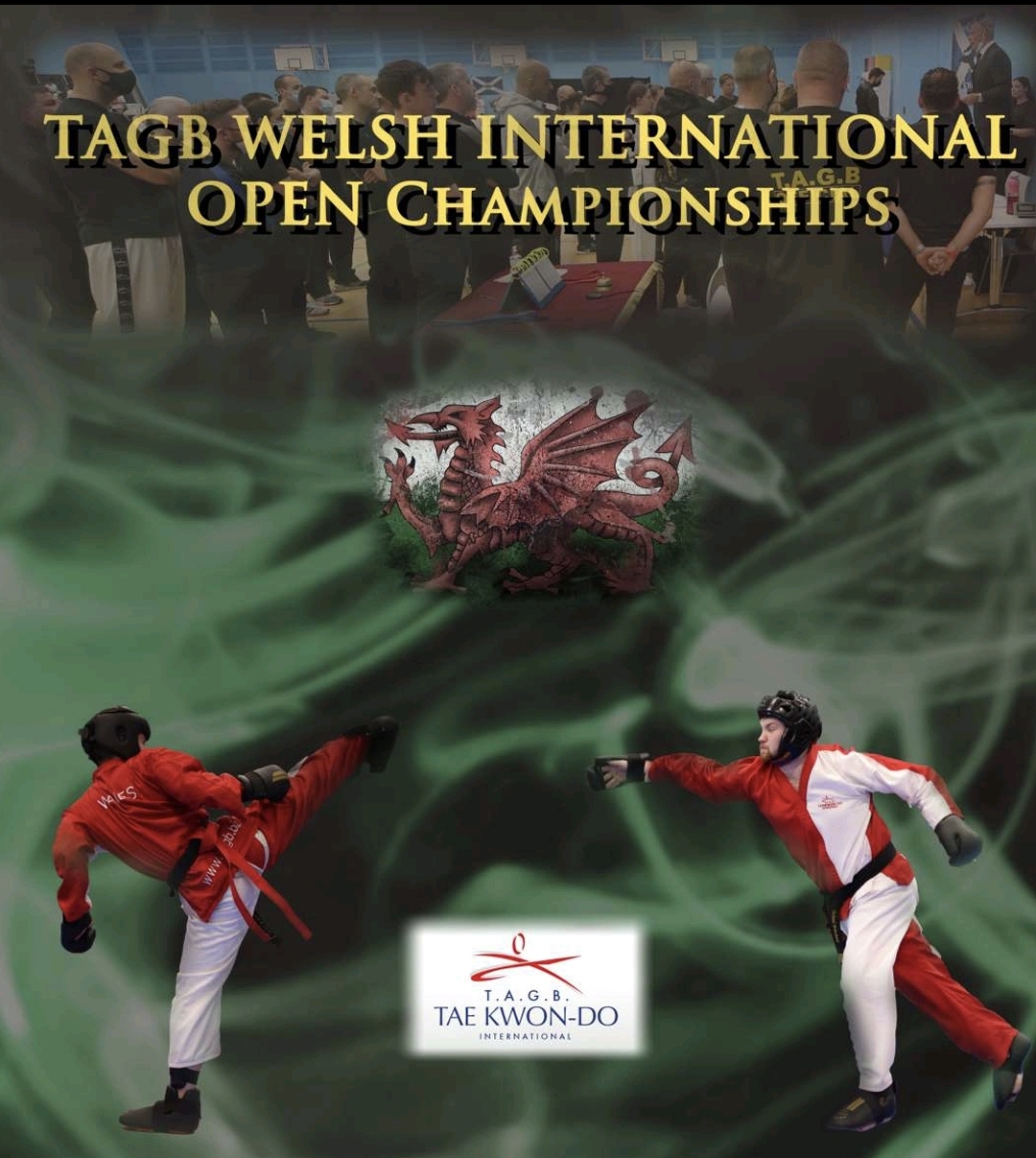
If you are interested in taking part in the Welsh Championships please read the PDF below, fill out the Competition Entry Form and return it to us. Payment can be made via bank transfer to the same account as fees.
Black Belts who wish to officiate please submit your names to us before the deadline date.
The deadline date is Thursday 5th May
April 2022 Black Belt Presentations

Tour Through Time: Stop 25: Bunhwangsa Temple
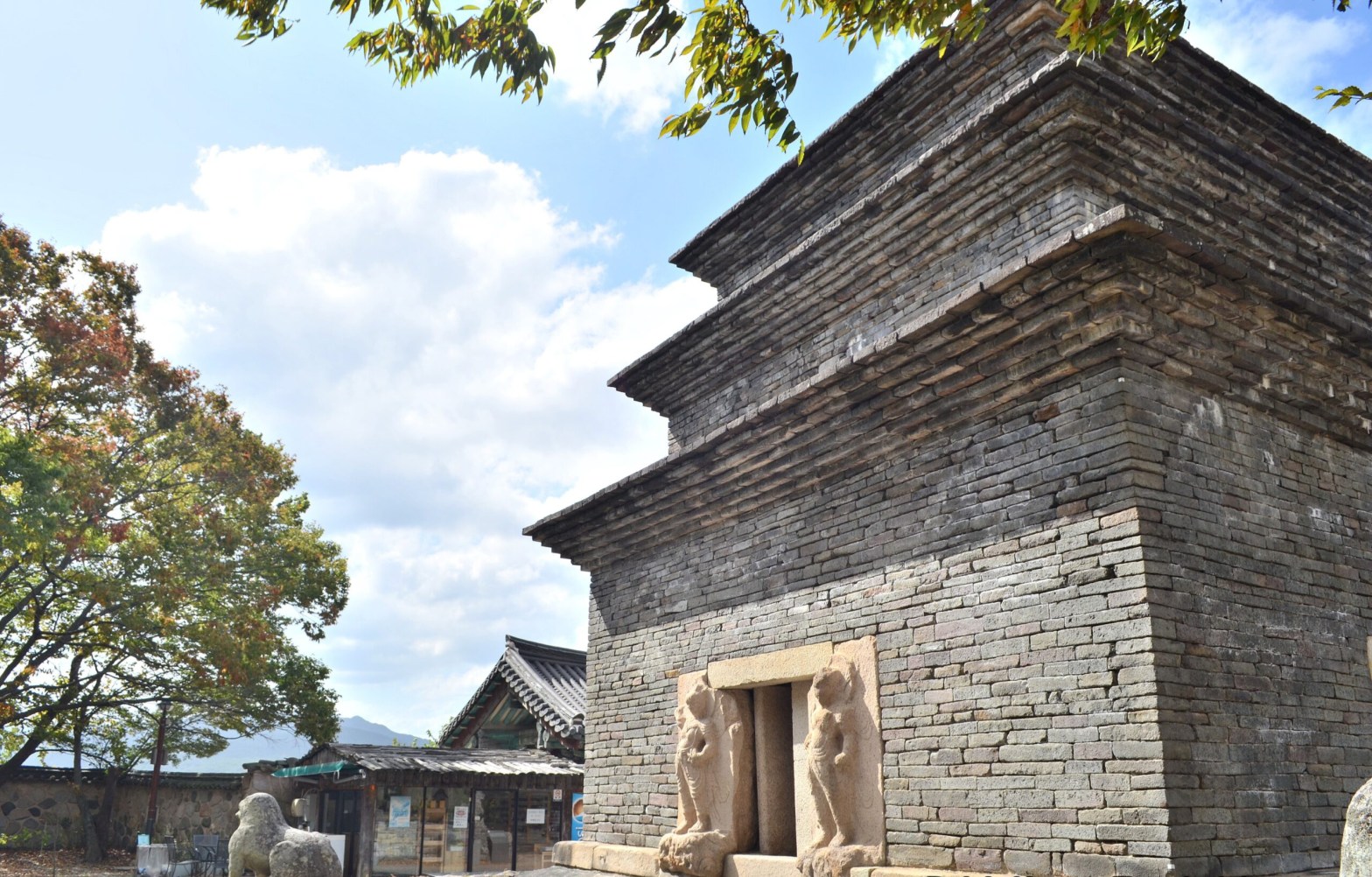
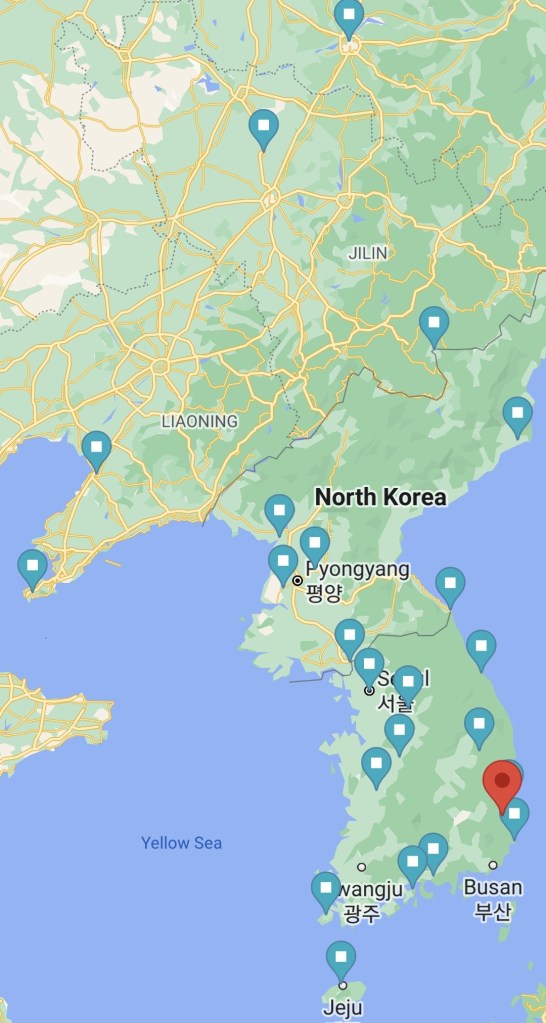
14 miles later and we arrive at the Bunhwangsa Temple in Gyeongju. Bunhwangsa means “Fragrant Emperor/Imperial Temple” and it was first established in 634 AD under Queen Seondeok of the Silla Dynasty. Buddhism had been adopted by the Silla Dynasty in 527 AD by King Beop-Heung, and the temple was originally several acres in size, consisting of an inner gate, three golden halls, an assembly hall, a gallery and a stone pagoda; the stone pagoda is the only part still standing today. Buddhism however remained out of reach of the common people until Won Hyo came along.
Won Hyo (meaning “break of dawn”) was the penname of Sol-Sedang, who was born in Apnyang in 617 AD. His penname was derived from his nickname “Sedak” meaning “dawn” which was given to him because he was born at dawn under a chestnut tree.
Won Hyo was so gifted as a child it was said that he could “infer ten things after learning one” and quickly became a skilled horse rider and javelin thrower, joining the Hwa Rang. He took part in many civil wars between the three Kingdoms of Silla, Goguryo and Baekje and watched many of his friends die in battle. It was realising the briefness of human life that drove him to become a Buddhist monk.
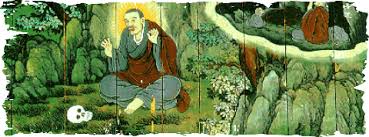
In 650 AD Won Hyo and his friend Uisang were travelling to China to study under Huan-Tchuang the Buddhist Scholar, when a Goguryo patrol boarded their boat and wrongly identified them as spies. It is said that what Won Hyo witness during his detainment impacted his Buddhist philosophies. They tried again in 661 AD to travel to China, but a storm hit and they were forced to take shelter in in a cave. Waking in the dark thirsty, Won Hyo fumbled around and found a vessel from which he quenched his thirst with the refreshing rain water. The following morning Won Hyo discovered that the vessel was in fact a rotten skull swimming with maggots, and he fell down and vomited. They were not in cave at all but a burial chamber. With the storm still raging on they were forced to sleep in the burial chamber another night; but Won Hyo could not sleep, reporting that he had heard terrifying sounds and seen visions of ghosts. From this observation he determined “When a thought arises, all dharmas (phenomenon) arise, and when a thought disappears, the shelter and the tomb are as one.”
Won Hyo’s “awakening” was the inner enlightenment that “everything is created by the mind alone”. Deciding he now understood life and death, he felt there was no need for him to find a master to learn from. He left Uisang to continue to China alone and instead headed back to Korea. His revelation changed his philosophy and he developed the Chongto-Gyo (Pure Land) Sect. He believed in teaching through word of mouth, spreading the word of Buddha through the lower classes who could not read, making it more popular among the entire population. It is said that through his efforts, leaving the Priest Hood and travelling and living among the people, that the whole of Silla turned to Buddhism.
In his travels he met Princess Yosok (the second daughter of King Muyeol, whose wife was the younger sister of General Kim Yoo Sin). The Princess was a widower, having lost her husband, a Hwa Rang warrior, in battle. She took comfort in Won Hyo’s words. After becoming ill she summoned Won Hyo to a meeting at the palace, begging him for help, explaining that is was her thoughts of wanting him that had made her sick. Won Hyo pondered what to do; Buddhist monks were not permitted to marry, but leaving her to die from sickness would also be a sin. After meditating on the situation for many days, he returned to Palace grounds to sing, until the King agreed for Won Hyo to marry his daughter.
After a few months his conscious weighed heavily on him and Won Hyo left his new wife to return to his original path. After he left the princess discovered that she was pregnant with his child, and gave birth to their son Sol-Ch’ong, who later became a great Confucian Scholar.
During his life, Won Hyo saw the unification of the three Kingdoms of Korea in 668 AD and brought about great changes in Korea through his Buddhist teachings, which impacted not just Korea but Japan and China as well. He wrote 86 pieces in 240 fascicles, of which 23 still exist. One of his works, the “Awakening of Faith” is considered the most influential Korean text ever.
He passed away in 686 AD, aged 70, and his body was laid to rest by Sol-Ch’ong at the Bunhwangsa Temple. Upon his gravestone it says “He strove to master the principles of the universe, and made his goal the most profound truth of all.”
We will be marking our arrival here with 14 Mountain Climber Burpees before continuing 26 miles south to another burial place.
April 2022 Black Belt Grading Results


Tour Through Time: Stop 24: Pohang

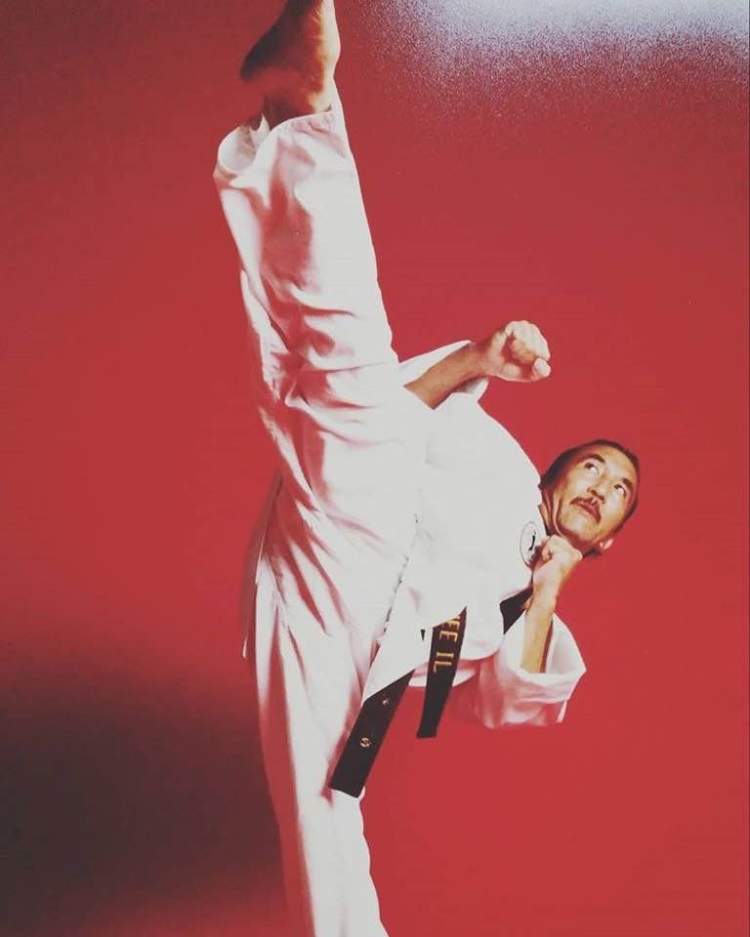
17 miles later and we arrive in Pohang. On 13th October 1940 Hee Il Cho was born here; the man who would become the very first Senior Grading Examiner for the T.A.G.B.
He started his Martial Arts training when he was 10 and got his Black Belt at just 13 years old. In a later interview he spoke of why he had started Martial Arts “Although they were not really gang members, young people used to roam from town to town and beat up kids and take away their toys. One time, I was beaten up by some boys around 12 or 13 years old. At the time I thought it was pretty bad, so I wanted to protect myself.”
He went on to comment on how difficult his training had been in a poverty-stricken area “In those days, the only way to survive was to get tough. So it didn’t bother us that much. Hunger was a natural thing; we ate maybe once a day. Your character becomes stronger when you have to go through hardships like that…. Training is like driving a car – you have to put gas in your tank. In those days, because of malnutrition, many things were not so effective. After training, we would get dizzy because we didn’t put anything into our body. That’s not the way people should work out.”
Cho joined the Korean Army in 1962 at the age of 22. Now a 4th Degree Black Belt in Tae Kwon-Do he taught the Art to special forces in the Korean, Indian and US Armies.
Later in 1968 he emigrated from South Korea to the US, travelling though the country before settling in Los Angeles in 1975. In an interview speaking of his experiences teaching Tae Kwon-Do in America and the challenges he faced with members of the public he said “All this has created a great conflict within me, for if I cannot use my skill to protect myself from any person who walks in off the street and demands a fight, how can I hope my students will retain confidence in my ability to teach them this skill? And yet, if I use my skill and hurt someone, even if self-defence, have I not betrayed the spirit of what Martial Arts are all about?”
Tae Kwon-Do had changed a lot since he had started, and in a later interview he had said “The training methods were very primitive back then, not based on a scientific approach as they are today. The Instructor would say, ‘Block this way, kick this way, punch this way’ and no questions would arise. And the kicking method was different. It was not as technically good as it is today. Today’s method is much better… Students used to punch hard surfaces and make their knuckles big. The training was tougher, but not as skilful… The only things better then were the discipline and respect that were taught.”
In 1980 he founded Action International Martial Arts Association, based in Hawaii, and when the Tae Kwon-Do Association of Great Britain was formed in 1983, Cho became our first Senior Grading Examiner.
Now 81 years old and a 9th Dan Grand Master, Cho is still actively involved in Tae Kwon-Do. Over his life he has written 11 books, produced over 70 videos, and has been the featured Martial Artist on over 70 magazine covers. His message: “If you teach long enough, you realise that you want to pass along the spirituality, the belief that the individual can accomplish whatever they want.”
We will be celebrating our arrival here with 17 knuckle press ups before continuing 14 miles south to a temple.

#MondayMotivation

“You can’t always have a good day. But you can always face a bad day with a good attitude.”
#MondayMotivation
Tour Through Time: Stop 23: Chunghyo Ri
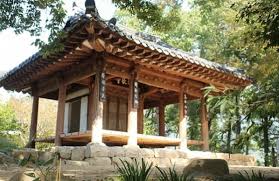
37 miles later and we arrive in Chunghyo Ri, originally Seokjeo Village, where Kim Duk Ryang was born into a peasant family in 1567. He became a student of Neo-Confucian scholar Seong-Hon, and later joined the army with his brother Kim Duk Hong when Hideyoshi Toyotomi led Japan to invade Korea in the Imjin War.
Kim Duk Hong was sadly killed at the battle of Guemsan, but Kim Duk Ryang assembled an army of 5,000 local volunteers and fought the Japanese again at Damyang. He was appointed a senior official of the Ministry of Justice by King Seonjo, and later also Royal Messenger, being given the name General Yikho. He defeated Japanese troops at Jinhae and Goseong with Commander-in-Chief Kwon Yul, and later also with Admiral Yi Sun Sin. The Japanese nicknamed him General Seokjeo, and after the battle of Jeongam King Seonjo gave him the military title Choongyonggun.
In 1596 Yi Mong-Hak started a rebellion and subordinates of the King who had grown jealous of Kim’s reputation had him falsely implicated. King Seonjo had Kim arrested and bound to a tree with chains, but Kim apparently laughed and said “I bowed [to] you to defeat the Japanese invaders because you gave me many rewards. But how could I ever plot against this country? If I were such a person, what kind of punishment is this helpless tree?” before tearing off the chains with his bare hands.
Despite efforts from many ministers to aid Kim’s release, he was kept a prisoner; it is said that as part of his torture his skin was peeled from his body and his shins were broken, before being executed at the age of 29 (not 27 as many sources claim). Kim was finally exonerated of the crimes 65 years after his death when it was revealed that the charges were based on false testimonies. Kim’s loyalty and bravery did not go unrecognised, as he was awarded the posthumous title “Minister of War” by King Suk-Jong in 1681, the title of “Chungjanggong” by King Jeong-Jo in the late 18th century, and “Head of Parliament” in 1788. His hometown of Seokjo Village, where we are now, was also renamed Chunghyo Ri, meaning the place of loyalty and family devotion.
In 1889 a shrine was built by Kim’s ancestors called the Chigajeong Pavillion, where there is a tombstone carved with a poem. Another shrine called the Chungjangsa Shrine was built at Kim’s ancestral home in 1975, facing the Mudang Mountain. In this shrine are some his clothes and samples of his handwriting. He is buried in a tomb behind the shrine, where his gravestone can be found.
We will be marking our arrival here with 37 sit ups before continuing a short 17 miles east to another birthplace.
#MondayMotivation

“Sometimes we’re tested not to show our weaknesses but to discover our strengths”
#MondayMotivation
Tour Through Time: Stop 22: Dosan Seowon

94 miles later and we arrive at the Confucian Academy of Dosan Seowon, Andong. Yi Hwang was born near here in On’gye-ri on 25th November 1501, the youngest of 8 children. His Uncle taught him the Analects of Confucius at just 12 years old. He then moved onto writing poetry after admiring the work of Chinese poet Tao Qian; writing “Yadang” (Pond in the Wind) at 18 using the penname “Toi Gye” meaning “returning stream”.
At the age of 20 he then studied the ancient Chinese text I Ching and at the same time Neo-Confucianism, travelling to Seoul at 23 to enter the National Academy. He passed all the preliminary exams to become a government official and later also the Civil Service exams (usually only passed by those much older than Yi Hwang), with the highest of honours.
Yi Hwang held several positions in government, including Secret Royal Inspector, a role appointed directly by the King to travel to local provinces and secretly monitor officials to root out corruption, whilst still continuing to write poetry. He also enjoyed a game of “tuhu” (arrow throwing) which involved throwing arrows by hand into a jar 2 meters away.
Disillusioned, as many were, with the constant power struggles within the government, Yi Hwang decided to retire, but stepped out of retirement at 48, albeit away from the Royal Court, to become Governor of Danyang and later Punji, where he redeveloped the Baekundong Seowon (a private Neo-Confucius Academy).
Yi Hwang’s Neo-Confucianism grew in popularity amongst scholars and government officials, who supported the building of schools devoted to its teachings. Yi Hwang then founded the building we have travelled to, the Dosan Seodang, a private school, which prospered no end from his royal connections, allowing it to run for free with numerous generous donations of books and land etc. from the King.
As Neo-Confucianism increased in popularity with Yi Hwang and his younger contemporary Yi I, Buddhism went into decline. Because of the differing philosophies, government officials started arguing and fighting, which contributed to the later Japanese invasion and occupation of Korea by Hideyoshi Toyotomi in 1583.
Yi Hwang turned down many positions in government to focus on his private studies. However, King Myeong-Jong’s successor King Seonjo did eventually manage to convince him to come back at the age of 68 to write advisory documents and give lectures on Neo-Confucianism and the Confucian scripts he had studied.
Yi Hwang died in 1570, aged 70. In his lifetime he had held 29 different positions within government and served 4 different kings, as well as developing Neo-Confucianism. King Seonjo posthumously awarded Yi Hwang the highest ministerial rank and reformed the Dosan Seodang into what is now known as the Dosan Seowon, creating a shrine for Toi Gye as well as retaining its areas for study. Still preserved at his shrine today are four wooden blocks recording the “Twelve Songs of Tosan”, carved from Yi Hwang’s own handwriting in 1565 and celebrated as the oldest existing written version of any traditional Korean poetry.
Yi Hwang is considered one of the two great Confucian Scholars of Korea and because of this his image features on the 1,000 won note, with the Dosan Seowon on the reverse.
We will be celebrating our arrival here with 94 narrow squats before continuing 37 miles south to a famous birthplace.

 Newman Martial Arts